
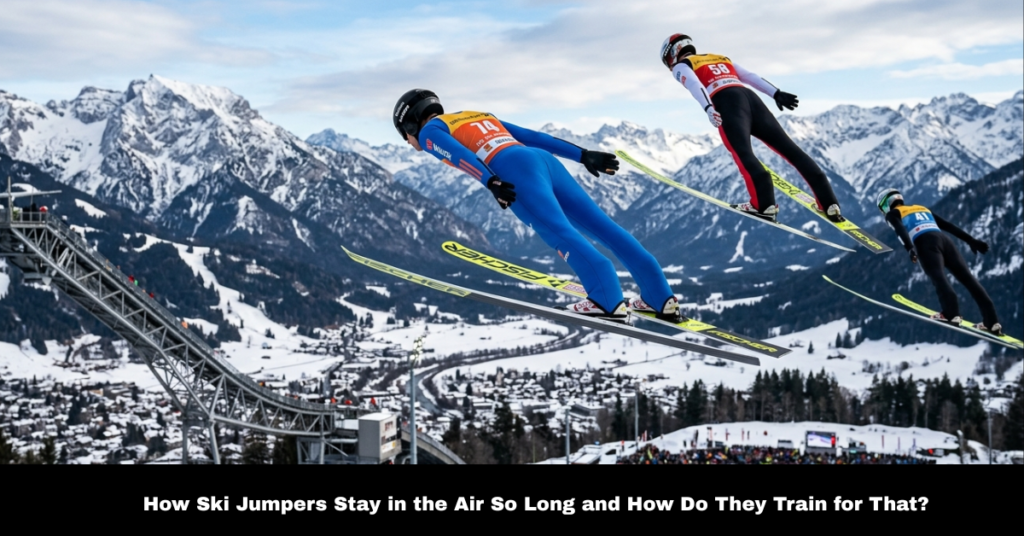

Ever watched a ski jumper fly through the air and thought, “Wait… how is it possible for ski jumpers to stay in the air so long and how do they train for that?” It almost looks like they’re defying gravity.
The truth is, ski jumping isn’t magic—it’s physics, precision, and years of intense training. In this article, we’ll break down exactly how ski jumpers stay airborne, how fast they go, and what it takes to train like an elite athlete in this extreme winter sport.
The Physics: How Ski Jumpers Stay in the Air So Long
At its core, ski jumping is all about turning speed into lift.
When a skier launches off the ramp, they aren’t just “falling” through the air. They are carefully controlling airflow around their body and skis to create lift—similar to how an airplane wing works.
Key forces at play:
- Gravity pulls them down
- Air resistance (drag) slows them
- Lift keeps them in the air longer
The secret is body position. Ski jumpers stretch their bodies forward and keep their skis in a V-shape, which increases surface area and helps them “glide” instead of drop.
This is the main reason how ski jumpers stay in the air so long and how do they train for that becomes such a fascinating topic—it’s controlled flight, not free fall.
How Fast Do Ski Jumpers Go on the Ramp?
Speed is everything in ski jumping.
So, how fast do ski jumpers go?
On average:
- In-run speed: 85 to 105 km/h (53 to 65 mph)
- On larger ski flying hills: can exceed 110 km/h (68 mph)
That speed builds kinetic energy, which converts into distance when they launch off the takeoff table.
The faster the speed (within control limits), the farther the jump—assuming perfect technique.
The Takeoff: The Most Important Split Second
The moment they leave the ramp lasts less than a second, but it decides everything.
A strong takeoff requires:
- Perfect timing
- Explosive leg power
- Forward body lean
- Balance over the skis
Even a tiny mistake here can cost several meters in distance.
The V-Style Technique: The Secret to Flight
Modern ski jumpers use the V-style, where skis form a wide “V” shape instead of being parallel.
This technique:
- Increases lift
- Reduces air drag
- Improves stability in the air
Before the 1980s, jumpers used parallel skis, but the V-style revolutionized the sport and added massive distances to jumps.
How Ski Jumpers Train for Flight and Control
Understanding how ski jumpers stay in the air so long and how do they train for that requires looking at their year-round training routine.
They don’t just train on snow—they train like gymnasts, sprinters, and even pilots in some ways.
1. Strength Training
Focus areas:
- Core strength (abs, lower back)
- Explosive leg power (squats, jumps)
- Balance and stability muscles
2. Balance & Coordination Drills
- One-leg stability exercises
- Bosu ball training
- Slackline walking
3. In-Run Simulation Training
Athletes practice:
- Low-position aerodynamic stance
- Speed control on wheeled ski tracks
4. Summer Ski Jumping Hills
Yes, they train in summer using:
- Plastic-covered ski jumps
- Water irrigation systems for glide simulation
5. Mental Training
Ski jumping is highly psychological:
- Visualization techniques
- Fear control exercises
- Reaction timing drills
Aerodynamics: Why Body Position Matters So Much
In the air, ski jumpers aim to become as aerodynamic as possible.
They:
- Lean forward at the hips
- Keep arms tight to the body
- Angle skis to maximize lift
- Adjust posture mid-air for stability
Even a small shift in angle can change flight distance by several meters.
Equipment That Helps Them Stay Airborne
Ski jumpers rely heavily on specialized gear:
- Long, wide skis (for more lift)
- Aerodynamic suits (minimize drag)
- Lightweight boots & bindings
- Helmet & goggles designed for airflow
Everything is regulated to ensure fairness, but even small equipment differences can matter.
Common Mistakes Beginners Make
If you’re learning about ski jumping, here are mistakes that affect performance:
- Leaning too far back during flight
- Poor takeoff timing
- Stiff body position
- Not controlling ski angle mid-air
FAQs
1. How is it possible for ski jumpers to stay in the air so long and how do they train for that?
It’s possible due to speed, aerodynamic body position, ski design, and lift forces. They train through strength work, balance drills, and repeated jump practice.
2. How fast do ski jumpers go before takeoff?
Typically between 85–105 km/h, depending on the hill size and conditions.
3. Why do ski jumpers lean forward in the air?
Leaning forward reduces drag and increases lift, helping them stay airborne longer.
4. Do ski jumpers feel scared when jumping?
Most beginners do, but elite athletes train mentally to control fear and focus on technique.
5. Can wind affect ski jumping distance?
Yes, wind is a major factor. Headwinds can increase lift, while tailwinds can reduce distance.
Conclusion
So, how is it possible for ski jumpers to stay in the air so long and how do they train for that? It all comes down to a powerful mix of physics, precision technique, and relentless training.
From reaching speeds over 100 km/h to mastering aerodynamic body positions, ski jumpers turn a steep hill into a temporary flight path. And through strength training, balance drills, and mental conditioning, they perfect the art of controlled flight.
If this sport fascinates you, the next step is exploring how different ski jumping hills affect performance—or even how scoring works in professional competitions.